




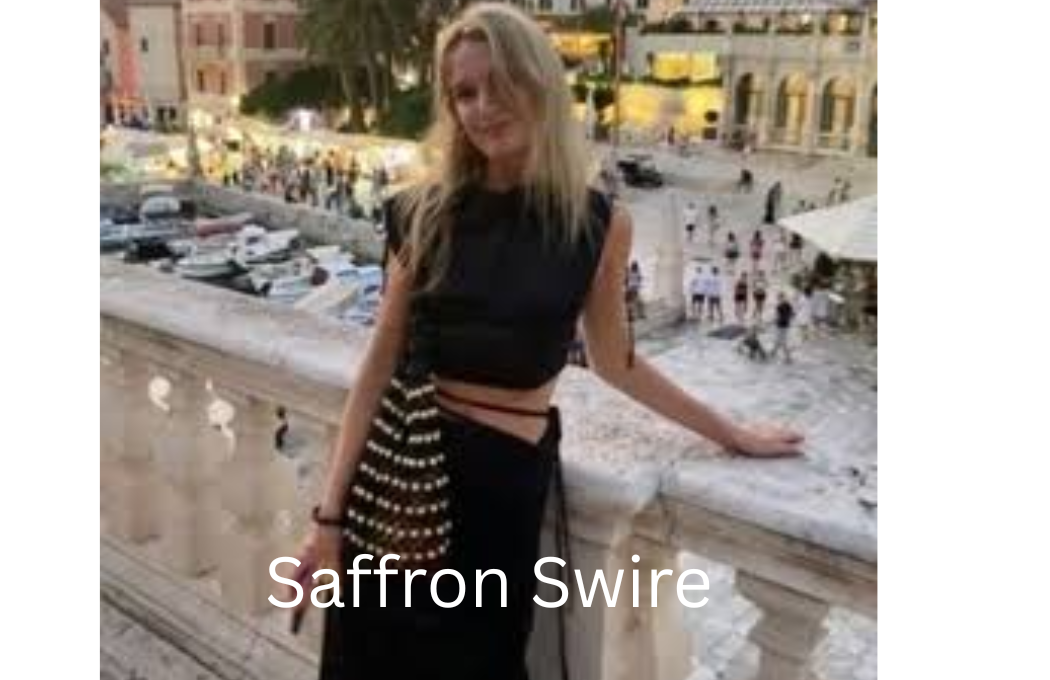
Saffron Swire is a British journalist, editor, reviewer, illustrator, and culture writer whose work spans arts, literature, film, theatre, music, travel, design, and contemporary ideas. Over the course of her developing career, she has contributed to a range of established publications and built a professional reputation around thoughtful cultural journalism. Her work demonstrates how modern journalism can combine traditional reporting and criticism with digital storytelling, illustration, and editorial work.
Swire has written for publications including The Spectator, Prospect, Time Out, The New European, Elephant, Art UK, and Broadsheet. Her professional portfolio describes her as a multimedia journalist and editor with particular interests in arts and culture. She has also worked as an editor, reviewer, and cartoonist, giving her Saffron Swirecareer a notably broad creative dimension.
Who Is Saffron Swire?
Saffron Swire is a London-born British journalist whose career has developed around culture and ideas. According to her professional profile at Time Out, she was formerly the Arts & Culture Editor at Time Out Melbourne. The profile describes her as London born and bred and notes her interests in art, books, live music, film, and food.
Her work is not limited to one branch of journalism. She has written articles and features about visual art, literature, theatre, film, music, travel, food, and wider social issues. This variety has helped establish her as a flexible culture writer capable of moving between reviews, interviews, features, and reported pieces.
Today, her professional profile also identifies her as an Associate Editor at Engelsberg Ideas, while she continues freelance writing and creative work.
Early Interest in Journalism and Illustration
Swire’s career reflects an interest in both journalism and visual creativity. While journalism became a central professional path, illustration and cartooning have also played an important role in her work.
In a professional LinkedIn post, Swire discussed completing an MA in Broadcast Journalism at City, University of London, graduating with distinction. In the same post, she described illustration as another major passion and discussed developing Saftirical, a project intended to combine satirical art with current affairs.
This combination of journalism and illustration is significant because it shows that her creative interests developed across multiple forms of communication. Rather than treating writing and visual storytelling as completely separate disciplines, Swire has explored ways of bringing them together.
Education and Journalism Training
Swire completed postgraduate journalism training at City, University of London. Her MA in Broadcast Journalism provided a foundation in reporting and media production and helped prepare her for professional work across different formats.
Broadcast journalism can involve research, interviewing, storytelling, accuracy, and the ability to communicate complicated subjects clearly. These skills are useful beyond television and radio, particularly for modern multimedia journalism.
Her later career shows the benefit of that broad training. She has worked across print and digital publications and has written both cultural criticism and longer-form features.
Career at Time Out Melbourne
One of the notable stages of Saffron Swire’s career was her work with Time Out Melbourne, where she served as Arts & Culture Editor.
The role placed her at the centre of Melbourne’s cultural scene. As an arts and culture editor, she covered subjects such as theatre, film, exhibitions, music, entertainment, and events. Her Time Out author page lists dozens of articles, demonstrating the breadth of her editorial output.
Her work for Time Out included entertainment journalism as well as cultural commentary. For example, she wrote about Australia’s Oscar prospects and major international films during the 2023 awards season.
Working in a major city known for its arts and festival culture gave Swire an opportunity to develop a strong understanding of cultural journalism. It also expanded her professional experience beyond the United Kingdom.
Writing for The Spectator
Saffron Swire has also contributed to The Spectator, writing on subjects ranging from music and art to travel and cultural history.
Her work for the publication includes an article about David Bowie’s Young Americans, an exploration of the life and work of art critic David Sylvester, and a feature about music’s role in Ukraine.
She has also written travel-related journalism, including a piece about the Galápagos Islands and another about a wellness retreat in the Himalayas. These articles illustrate the range of subjects she can cover while maintaining a cultural and narrative approach.
Contributions to Prospect Magazine
Another important part of Swire’s professional portfolio is her work for Prospect magazine.
Her author page identifies her as a freelance journalist and lists cultural pieces focused on artists and visual culture.
One example is her writing about Paula Rego, a major Portuguese-British artist known for figurative painting and drawing. Swire’s cultural writing examines artists not simply through biographical facts but through their artistic language, themes, and historical significance.
She has also written about Barbara Hepworth and the importance of colour in the sculptor’s work. Her article explores the relationship between Hepworth’s sculptures, landscape, sea, and colour.
Focus on Arts and Culture
Arts and culture journalism is arguably the defining theme of Swire’s career.
Her portfolio lists experience across literature, design, film, visual art, travel, music, and theatre. This wide range gives her work a multidisciplinary quality.
Culture journalism requires more than simply describing an exhibition, film, or performance. A successful cultural writer needs to explain why a work matters, place it within a broader context, and help readers understand its significance.
Swire’s portfolio demonstrates this approach through reviews, interviews, profiles, and reported features.
International Reporting and Cultural Stories
Although Swire is strongly associated with arts journalism, her work has also addressed international affairs and social questions.
For example, she reported on Tbilisi’s underground music scene during a period of political uncertainty in Georgia. Her Prospect article examined how musicians and cultural spaces were responding to their country’s political environment.
This type of journalism demonstrates how culture can become a way of understanding larger political and social developments. Music, art, literature, and performance can reflect public sentiment and provide communities with ways to express their concerns.
Work as a Reviewer and Editor
Swire’s professional identity extends beyond being a writer. Her portfolio describes her as a writer, reviewer, and editor, while her current profile identifies her as an Associate Editor at Engelsberg Ideas.
Editing requires a different set of skills from writing. Editors need to assess ideas, structure articles, improve clarity, work with contributors, and maintain publication standards.
This combination of writing and editorial experience gives Swire a broader understanding of the publishing process. She can approach a story both as a journalist creating the piece and as an editor thinking about the needs of readers and publications.
Illustration and Cartooning
Another distinctive part of Saffron Swire’s career is her work in illustration and cartooning.
Her early journalism ambitions included illustration, and later professional profiles identify her as a cartoonist for The Observer.
Cartooning provides a different method of communicating ideas. While traditional journalism may require paragraphs of explanation, a well-designed illustration can convey an argument or observation quickly through visual symbolism and humour.
Swire’s combination of writing and illustration therefore gives her a distinctive creative profile within contemporary journalism.
Writing Style and Areas of Interest
Swire’s published work suggests a particular interest in stories where culture intersects with society. Her subjects range from artists and musicians to travel destinations, filmmakers, chefs, political movements, and cultural institutions.
Her portfolio includes food writing, for example, as well as reporting about music and cultural resistance. She has written profiles and interviews that focus on the personalities behind creative industries.
This breadth allows her to move between lighter lifestyle journalism and more serious cultural reporting.
Saffron Swire’s Professional Profile Today
Saffron Swire continues to work across journalism, editing, and creative media. Her professional profiles currently describe her as an Associate Editor at Engelsberg Ideas and a freelance culture writer, reviewer, illustrator, and editor.
Her continuing work across different publications demonstrates how modern journalists increasingly build careers across multiple platforms rather than remaining permanently attached to one publication.
Her bylines across Prospect, The Spectator, Time Out, The New European, Elephant, Art UK, and other outlets show the range of her professional network and interests.
Why Saffron Swire’s Career Is Interesting
Saffron Swire’s career is interesting because it demonstrates the changing nature of cultural journalism. Today’s culture writer may be expected to write reviews, conduct interviews, produce travel features, understand digital audiences, edit material, and sometimes work with visual media.
Swire’s career reflects many of these developments. Her background in broadcast journalism, experience as an arts editor, freelance writing, editorial work, and interest in illustration all form part of a broader multimedia approach.
Rather than focusing exclusively on celebrity coverage or entertainment news, her work frequently explores the relationship between creative expression and wider society.
Conclusion
Saffron Swire is a British journalist, editor, reviewer, illustrator, and culture writer with a growing body of work across arts, literature, film, theatre, music, travel, and ideas. From her journalism studies at City, University of London to her role as Arts & Culture Editor at Time Out Melbourne and her later work with publications such as Prospect and The Spectator, her career has developed across a diverse range of media.
Her work as an Associate Editor at Engelsberg Ideas and her continued freelance writing demonstrate an ongoing commitment to journalism and cultural commentary.
What makes Saffron Swire particularly distinctive is the combination of traditional journalism with illustration and cartooning. Her career illustrates how modern cultural journalism can cross boundaries between written criticism, reporting, visual storytelling, and editorial work.
As her portfolio continues to develop, Saffron Swire remains a notable emerging voice in British arts and culture journalism, with a professional profile that connects creative subjects with broader social and cultural questions.