








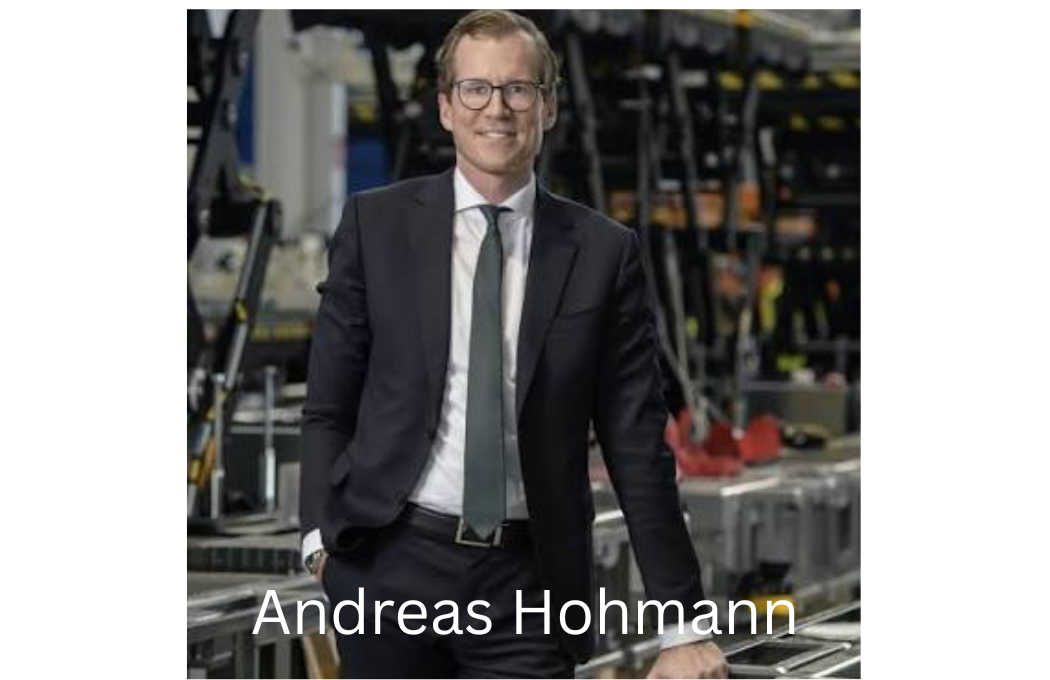
Andreas Hohmann is a German sports scientist and university professor whose career has been closely connected with training science, movement science, athlete development, and competitive sport. Born on June 1, 1957, Hohmann developed an unusual combination of academic and practical sporting experience. His background includes university research, teaching, water polo, coaching, athlete development, and involvement with several German sports organizations.
Over several decades, Andreas Hohmann has contributed to discussions about how athletes train, how sporting talent can be developed, and how performance can be assessed. His academic work has particularly focused on training control, talent research, competition diagnostics, and sports-game performance. His professional career has also included positions at universities in Magdeburg, Potsdam, and Bayreuth.
Who Is Andreas Hohmann?
Andreas Hohmann is a German sports scientist and former university chairholder at the University of Bayreuth. His academic specialization is primarily in training science and movement science, fields that examine how physical performance develops and how training can be planned and evaluated.
Unlike researchers whose careers remain entirely within academic institutions, Hohmann has also had direct experience with competitive sport. He played water polo in Germany’s top league and later worked as a coach. He was also an assistant coach with the German national water polo team during the 1987 European Championships and the 1988 Olympic Games in Seoul.
This combination of practical sporting experience and academic research has been an important feature of his professional profile.
Early Education and Academic Background
Hohmann studied sport science and English at Johannes Gutenberg University Mainz from 1976 to 1980. His university education provided the foundation for a career that would eventually combine sports research, teaching, and coaching.
After completing his initial studies, Hohmann became a member of the Institute of Sport Science at the University of Stuttgart. He remained associated with the institution from 1980 until 1994. During this period, he continued his academic development while also gaining experience in competitive sport and coaching.
He completed his doctorate in 1985 at Johannes Gutenberg University Mainz. In 1993, he completed his habilitation, another significant academic qualification in the German university system. These achievements helped establish his credentials as a specialist in sports science.
Experience as a Competitive Water Polo Player
Sport was not simply an academic subject for Andreas Hohmann. He also competed at a high level.
Between 1979 and 1981, he played water polo in Germany’s first league for Wasserfreunde Fulda and SSV Esslingen. This experience gave him direct insight into the physical, tactical, and organizational demands of competitive team sport.
Competitive experience can provide sports researchers with a practical understanding of issues that are difficult to appreciate exclusively through theoretical study. In Hohmann’s case, his later research and coaching activities developed alongside this sporting background.
His connection with water polo continued after his playing career, particularly through coaching and work related to athlete development.
Coaching Career
Hohmann also worked as a coach in German top-level water polo. According to his University of Bayreuth curriculum vitae, he coached in the German first league during several periods, including 1983–1989 and 1991–1994.
One of the notable highlights of his coaching career came in 1987 and 1988, when he served as an assistant coach of Germany’s national water polo team. He participated with the team at the 1987 European Championships in Strasbourg and the 1988 Olympic Games in Seoul.
His coaching experience was not limited exclusively to water polo. In 1991 and 1992, he also coached the University of Stuttgart soccer team at the World Collegiate Soccer Championships in El Paso, Texas.
These experiences helped connect his academic interests with real sporting environments.
University Career
Hohmann’s academic career developed through several German universities.
In 1994, he became a professor for the Theory and Practice of Sports at Otto-von-Guericke University Magdeburg. He later moved to the University of Potsdam, where he held a professorship in training and movement science from 1999 to 2005.
In 2005, Hohmann moved to the University of Bayreuth, where he became professor of training and movement science. His work there was associated with the university’s sports science activities and included teaching, research, and academic supervision.
His academic focus has included training science, kinesiology, talent development, and sports performance.
Research Interests of Andreas Hohmann
A major part of Andreas Hohmann’s professional identity is his research in sports science. His work has addressed several areas that are important to athletes and coaches.
These include:
- Training science
- Movement science
- Talent development
- Training control
- Competition diagnostics
- Youth athlete development
- Sports-game performance
- Swimming and water polo
- Training methodology
The University of Bayreuth lists training science and kinesiology among his teaching priorities.
One important theme in his work is the question of how young athletes should be developed over time. Contemporary sports science often considers whether young athletes should specialize early in one sport or participate in several sports before focusing more strongly on a particular discipline.
Hohmann has published work on differentiated models of athlete development, including research examining early specialization and participation in multiple sports. The University of Bayreuth lists a 2025 paper titled Youth Training and Sport Participation: A Differenciated Model of Athlete Development among his publications.
Contributions to Talent Development
Talent development is one of the most recognizable themes associated with Hohmann’s academic work.
Identifying talented athletes is only one part of successful athlete development. Coaches and researchers also need to understand how training should progress as athletes mature. Factors such as physical development, technical ability, tactical understanding, motivation, and sporting environment can all affect development.
Hohmann contributed to this area through research and publications concerning talent in sport and youth training. He was also involved in work examining concepts for successful youth training.
His publications demonstrate an interest in understanding athlete development as a long-term process rather than simply measuring performance at one particular age.
Publications and Books
Andreas Hohmann has been involved in numerous publications relating to sports science and training.
Among the works listed by the University of Bayreuth are Einführung in die Trainingswissenschaft, a training-science textbook published in a revised seventh edition in 2020, and Peaking im Spitzensport, published in 2023 with Micha Pietzonka.
He has also contributed to publications dealing with youth training, football, handball, basketball, and water polo.
Another area of his work involves the organization and control of training. His earlier academic work included Grundlagen der Trainingssteuerung im Sportspiel, which focused on training control in sports games.
Such publications reflect his broader interest in translating scientific concepts into approaches that coaches and athletes can use.
Work With Sports Organizations
Hohmann’s career has also included involvement with sports organizations outside universities.
He has held roles connected with the German Sport Science Society (dvs) and its training science section. The University of Bayreuth profile records his involvement with the society and its training science activities, including leadership responsibilities.
He has also served on scientific and advisory bodies connected with German sport. His professional profile includes involvement with organizations such as the German Swimming Federation, the National Anti-Doping Agency, and the Federal Institute of Sport Science.
These roles illustrate how sports science can connect academic research with the practical administration and development of sport.
International Academic Activities
Hohmann’s work has also included international academic connections.
The University of Bayreuth records visiting-professor appointments at the Shanghai University of Sport and the Shanghai Research Institute of Sport Science.
International academic work can provide opportunities for researchers to compare different approaches to sports training, athlete development, and sports education. Hohmann’s activities in China therefore form another part of his broader professional career.
Andreas Hohmann and Training Science
Training science is concerned with understanding how structured physical activity can produce improvements in performance. It considers questions such as how training loads should be organized, how athletes recover, how performance changes over time, and how preparation can be adapted to individual needs.
Hohmann’s career has been closely connected with these questions.
His research and publications demonstrate an interest in systematic training rather than relying exclusively on intuition. This is particularly important in competitive sport, where coaches often need to balance performance goals with the athlete’s development and long-term progression.
His work on training control and competition diagnostics reflects this scientific approach.
Importance of His Practical Sporting Experience
One distinctive aspect of Andreas Hohmann’s biography isAndreas Hohmann the combination of athlete, coach, researcher, and professor.
His experience as a water polo player gave him direct knowledge of competitive sport. His coaching career exposed him to the practical challenges faced by teams and athletes. His academic career then provided an environment in which those experiences could be studied systematically.
This combination is valuable in sports science because research is often most useful when it can be connected to real sporting situations.
Recent Research Interests
Hohmann’s publication record continues to include subjects connected with athlete development and training. The University of Bayreuth profile lists recent work on youth training and sport participation, as well as a 2026 article concerning early specialization versus participation across multiple sports.
These topics remain relevant because youth sport continues to raise questions about how athletes can develop skills while maintaining healthy and sustainable participation.
Research in this area can help coaches and sporting organizations think about development over longer periods instead of focusing only on immediate competitive results.
Legacy in Sports Science
Andreas Hohmann’s professional career spans several decades and combines academic research, teaching, coaching, and sporting administration.
His work has contributed to areas such as training science, movement science, talent development, and sports performance. His publications have addressed both theoretical questions and practical aspects of training. His involvement with sports organizations has also provided opportunities to connect academic expertise with sporting practice.
Rather than being known for a single achievement, Hohmann’s career is characterized by sustained involvement across different parts of sports science.
Frequently Asked Questions About Andreas Hohmann
Who is Andreas Hohmann?
Andreas Hohmann is a German sports scientist and university professor whose professional specialization includes training science, movement science, athlete development, and sports performance.
When was Andreas Hohmann born?
Andreas Hohmann was born on June 1, 1957.
What did Andreas Hohmann study?
He studied sport science and English at Johannes Gutenberg University Mainz from 1976 to 1980.
Did Andreas Hohmann play professional sport?
He played water polo in Germany’s first league between 1979 and 1981 for Wasserfreunde Fulda and SSV Esslingen.
What is Andreas Hohmann known for?
He is particularly associated with research and teaching in training science, movement science, talent development, training control, and sports performance.
Was Andreas Hohmann involved in the Olympic Games?
Yes. He served as an assistant coach with Germany’s national water polo team at the 1988 Olympic Games in Seoul.
Conclusion
Andreas Hohmann has built a long career at the intersection of sport, research, education, and coaching. From his early studies in Mainz and his experience as a competitive water polo player to his work as a coach and professor, his professional journey reflects a sustained interest in understanding athletic performance.
His academic career at universities including Magdeburg, Potsdam, and Bayreuth has allowed him to contribute to training and movement science over many years. His research into talent development, training control, competition diagnostics, and youth athlete development has also connected his work to practical questions faced by athletes and coaches.
With publications covering training methodology, sports games, talent development, and athlete preparation, Andreas Hohmann remains a notable figure in German sports science. His career demonstrates how academic research and practical sporting experience can complement one another in the study of athletic development and performance.