


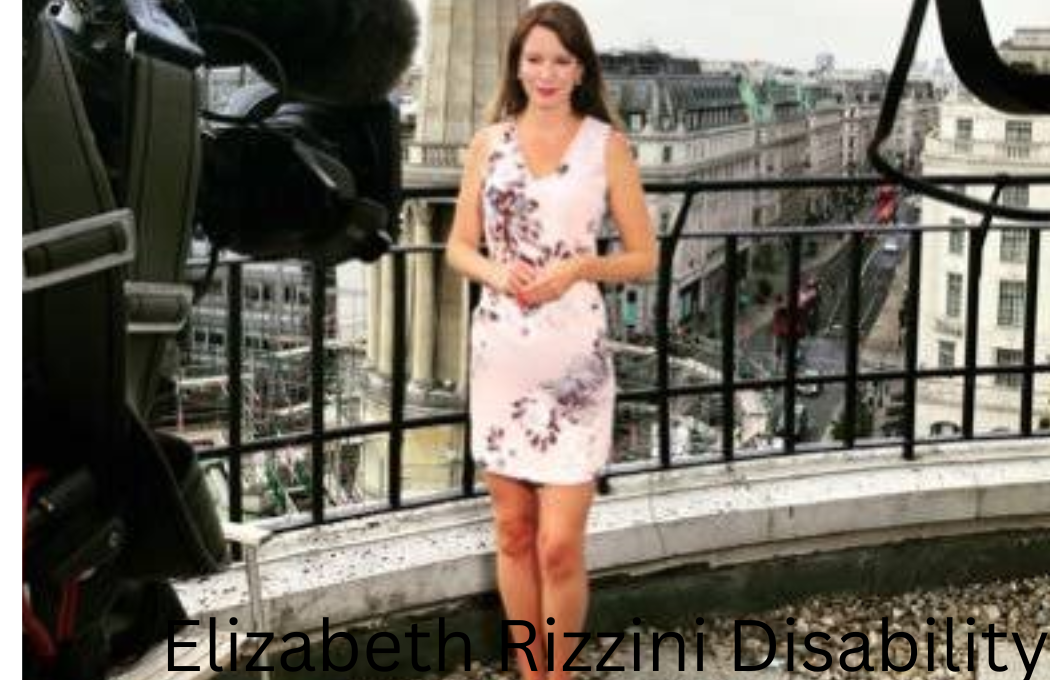
Elizabeth Rizzini is a familiar face to many British television viewers through her work as a BBC weather presenter. Over time, however, one particular phrase has generated considerable online curiosity: “Elizabeth Rizzini disability.” People searching this term may be trying to discover whether the broadcaster has a disability or health condition, or they may have encountered her name in discussions about disability and accessibility.
The important point is that searches and online speculation should not be treated as medical evidence. There is no credible publicly verified information confirming that Elizabeth Rizzini has a disability. Several online articles discussing the subject reach the same conclusion, while also explaining that the confusion appears to be connected partly to her relationship with BBC security correspondent Frank Gardner.
This article looks at what can responsibly be said about the topic, why the search phrase exists, and why it is important to distinguish confirmed information from assumptions.
Who Is Elizabeth Rizzini?
Elizabeth Rizzini is known primarily for her career in weather broadcasting. She has become a recognizable presence on BBC television, where her role involves communicating weather information to audiences in a clear and accessible way.
Weather presenters occupy an interesting position in broadcasting because they combine scientific information with public communication. A forecast may involve complicated meteorological data, but the presenter needs to turn that information into something viewers can understand quickly.
Rizzini has built her professional profile around this combination of communication and meteorology. Her television appearances have made her a familiar personality, while her professional background has helped establish her credibility as a weather presenter.
Like many broadcasters, she also maintains boundaries between her professional life and her private circumstances. That distinction is particularly important when discussing personal subjects such as health or disability.
Does Elizabeth Rizzini Have a Disability?
There is no publicly verified evidence confirming that Elizabeth Rizzini has a disability.
This distinction matters because an internet search result, social-media post, or repeated claim on a blog does not establish that someone has a medical condition. Unless a person has publicly disclosed a condition or a reliable source has independently and appropriately reported it, claims about an individual’s health should be treated cautiously.
Several articles published online specifically about the “Elizabeth Rizzini disability” search term state that no confirmed disability has been publicly disclosed by Rizzini.
It is therefore more accurate to say that Elizabeth Rizzini has no publicly confirmed disability, rather than making assumptions about her private medical circumstances.
Why Is “Elizabeth Rizzini Disability” Such a Common Search?
One of the main explanations for the search term is the public association between Elizabeth Rizzini and Frank Gardner.
Gardner is a BBC Security Correspondent whose life changed dramatically after he was seriously injured while reporting in Saudi Arabia in 2004. His injuries resulted in paralysis, and he has subsequently used a wheelchair. His experiences have been discussed publicly through journalism, interviews, books and documentary work.
Because Rizzini and Gardner are associated publicly, their names sometimes appear together in searches and articles concerning disability.
That association can create confusion for people who encounter the names without sufficient context. A person searching for information about Gardner may encounter Rizzini’s name and then wonder whether the disability being discussed applies to both of them.
However, these are two separate individuals and should not be treated as having the same medical circumstances.
The Connection With Frank Gardner
Frank Gardner’s disability is well documented in the public domain. His professional career as a journalist continued after his injuries, and his experiences have contributed to wider public discussions about disability, accessibility and representation.
Rizzini’s connection with Gardner has therefore brought her into conversations that also involve disability.
This does not, however, establish that she has a disability herself.
The distinction is important because a person’s relationship with someone who has a disability does not mean that the person shares that disability. Online discussions can sometimes blur that distinction, particularly when search engines repeatedly connect two names.
How Search Engines Can Create Confusion
Modern search engines are designed to connect people with information they may be looking for. They use signals such as previous searches, frequently associated terms and online content.
As a result, a phrase can become widely searched even when its underlying assumption is incorrect.
Suppose thousands of people repeatedly search for a person’s name alongside a particular health-related word. Other websites may then create articles addressing that search. Those articles can themselves become indexed by search engines, creating even more results for the same phrase.
Over time, the existence of many pages discussing a subject can make the subject appear more established than it actually is.
This is one reason readers should not assume that a frequently appearing search term represents a confirmed fact.
The “Elizabeth Rizzini disability” discussion provides a useful example of why search popularity and factual confirmation are two different things.
Why Health Claims Require Extra Care
Health information is fundamentally different from many ordinary biographical details.
For example, a person’s occupation or a television programme they appeared on can generally be confirmed through public records and professional sources. A person’s medical history is much more private.
Disability can also take many different forms. Some disabilities are visible, while others may not be apparent to other people. Someone’s appearance, manner of walking, work schedule or public activities cannot reliably establish whether that person has a disability.
For that reason, it is inappropriate to diagnose or label a public figure based on photographs, television appearances or internet speculation.
The responsible approach is to rely on a person’s own public disclosure or reliable reporting from authoritative sources.
Disability Should Not Be Used as Gossip
The discussion surrounding Elizabeth Rizzini also raises a broader issue about how disability is discussed online.
Disability is not simply a celebrity search topic. For millions of people, it is part of everyday life and can affect accessibility, employment, education, transportation and social participation.
When an unverified claim about a public figure becomes a repeated online story, it can unintentionally encourage the idea that disability is something to speculate about.
A better approach is to focus on verified information and respectful language.
This is especially important when discussing people who have chosen to keep their medical circumstances private.
Frank Gardner’s Public Experience
Frank Gardner’s story is different because his disability and experiences have been discussed publicly throughout his career.
His work has allowed audiences to see a journalist continue a demanding professional career while living with significant physical disability. His public experience has also contributed to conversations about representation in broadcasting.
The fact that Gardner has openly discussed his disability provides a legitimate basis for reporting on it.
That openness should not automatically be transferred to Rizzini’s personal medical history, however.
A public figure’s partner can support discussions surrounding disability without personally having the same condition.
Elizabeth Rizzini’s Career Remains the More Relevant Story
Rather than focusing exclusively on an unverified health claim, it is more useful to consider what is actually established about Elizabeth Rizzini.
Her public identity is primarily connected with weather broadcasting and meteorology. Her work involves explaining weather developments to viewers, communicating forecasts and appearing in television programming.
The profession requires accuracy, communication skills and the ability to explain scientific information in a way that is useful to a general audience.
Her career demonstrates why public figures can become widely recognized even when they maintain relatively private personal lives.
The continued interest in her private circumstances also illustrates the level of curiosity that familiar television personalities can attract.
The Difference Between “No Evidence” and “Proof”
There is an important distinction between saying that there is no publicly confirmed disability and claiming to know someone’s complete medical history.
The first statement is about the available public record.
The second would require access to private medical information, which the public generally does not have.
Therefore, the most responsible wording is that there is no publicly verified information confirming that Elizabeth Rizzini has a disability. This avoids making an unsupported medical claim in either direction.
Several online sources discussing the keyword similarly describe the disability association as a misunderstanding rather than a confirmed fact.
Why Responsible Reporting Matters
Online articles about public figures can reach thousands of readers, meaning inaccurate claims can spread quickly.
When the subject involves health, responsible reporting becomes particularly important.
Good reporting should:
- Distinguish confirmed facts from speculation.
- Avoid diagnosing people from appearances.
- Use reliable and attributable sources.
- Respect personal medical privacy.
- Correct misinformation when credible evidence is available.
- Avoid presenting search-engine suggestions as proof.
These principles apply not only to Elizabeth Rizzini but to any public figure.
Frequently Asked Questions
Does Elizabeth Rizzini have a publicly confirmed disability?
No publicly credible source identified in current reporting confirms that Elizabeth Rizzini has a disability. The online phrase appears to be associated largely with speculation and confusion.
Why do people search for Elizabeth Rizzini disability?
The search appears to be connected partly to her public association with Frank Gardner, whose disability is well documented. Their connection can lead people to encounter Rizzini’s name in disability-related discussions.
Who is Frank Gardner?
Frank Gardner is a BBC Security Correspondent. He was seriously injured while reporting in Saudi Arabia in 2004 and subsequently became a wheelchair user. His experiences have been publicly discussed throughout his journalism career.
Can someone’s appearance prove that they have a disability?
No. Many disabilities are invisible, and appearance alone cannot establish a person’s medical circumstances.
Has Elizabeth Rizzini publicly confirmed a disability?
There is no credible public confirmation identified in the sources reviewed for this article.
Why should people be careful with health-related rumors?
Health information is personal and sensitive. Repeating unsupported claims can spread misinformation and create an inaccurate impression of someone’s life.
Conclusion
The phrase “Elizabeth Rizzini disability” continues to attract online attention, but search popularity should not be confused with factual confirmation.
Based on publicly available information reviewed for this article, there is no verified public confirmation that Elizabeth Rizzini has a disability. Much of the confusion appears to stem from her association with Frank Gardner, a BBC journalist whose own disability has been openly documented.
The most responsible way to discuss the subject is therefore to separate Rizzini’sElizabeth Rizzini Disability confirmed professional biography from speculation about her private health. She is best known publicly for her work as a BBC weather presenter, while Gardner’s disability is a separate and independently documented part of his own story.
Ultimately, the topic provides a useful reminder about responsible online research: a frequently searched phrase is not necessarily a verified fact. When health and disability are involved, readers should rely on credible sources, respect privacy and avoid assumptions based on appearances or associations.